
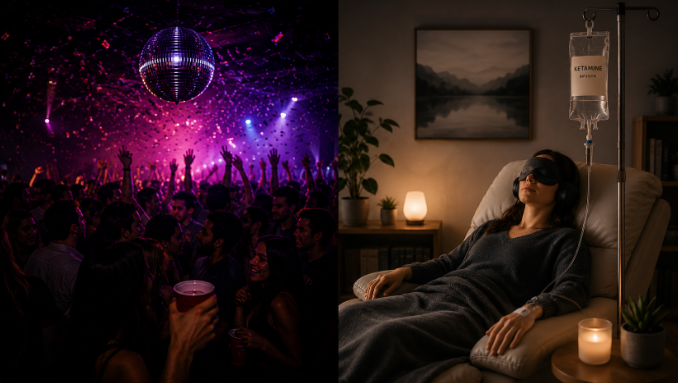
Clinical vs. Unsupervised Ketamine Doses: Why Setting and Supervision Matter
By Almadelic
Posted September 30, 2026
Ketamine has two very different reputations. In emergency rooms and operating rooms, it has been a trusted anesthetic for over fifty years. In psychiatric clinics, it is now used off label, and in one derivative form with full FDA approval, to treat depression that has not responded to other treatments. Outside of medicine, it also circulates as a recreational drug, often at doses many times higher than anything a clinic would use. The molecule is the same in every case. What changes is the amount, how it is given, and who is watching.
In short: Clinical ketamine therapy uses a small, precisely calculated dose delivered under direct medical supervision, with monitoring for blood pressure, breathing, and mental status throughout the session. Recreational use typically involves larger, unmeasured amounts taken without any of those safeguards, which is a major reason it carries a higher risk of overdose, injury, and dependence.
What Counts as a Clinical Dose of Ketamine?
In psychiatric research and in ketamine clinics, the standard antidepressant dose is a sub-anesthetic amount, far below what would be used to put a patient under for surgery. Clinical trials for treatment-resistant depression have consistently used intravenous ketamine at roughly 0.5 mg per kilogram of body weight, infused slowly over about 40 minutes under a clinician's direct supervision.
The FDA-approved nasal spray esketamine (Spravato) follows its own structured dosing schedule. Treatment begins with induction doses of 56 mg or 84 mg given twice a week, then tapers to weekly and eventually biweekly maintenance dosing as symptoms improve. Every dose is measured, administered in a certified healthcare setting, and followed by a mandatory observation period.
How Is Recreational Ketamine Use Different?
Recreational use does not follow a clinical protocol. Amounts are typically higher and are not weighed or calculated against a person's body weight, and there is no clinician present to adjust the dose or step in if something goes wrong. Recreational use is also frequently combined with alcohol or other substances, which compounds the risk of sedation and impaired breathing.
At high enough recreational doses, ketamine can produce a state sometimes called the "K-hole," marked by profound dissociation and unresponsiveness to the outside world. This intensity of effect is not the goal in clinical treatment, where doses are deliberately kept low enough to avoid it.
Why Does Medical Supervision Change the Risk?
Supervision is not a formality. During a clinical session, a provider tracks blood pressure, heart rate, breathing, and level of consciousness in real time, because ketamine can temporarily raise blood pressure and cause sedation severe enough to require intervention.
For esketamine specifically, the FDA requires this oversight through a formal Risk Evaluation and Mitigation Strategy. Patients must be treated at a certified healthcare setting, cannot take the medication home, and must be monitored by a provider for at least two hours after each dose before they are cleared to leave. This structure exists because the same drug that helps in a controlled dose can cause serious harm in an uncontrolled one.
What Are the Real Risks of Unsupervised Use?
Unsupervised, at-home use of ketamine, even when it starts with a prescription, has been linked to reports of accidental overdose. Clinicians have also raised concern about ketamine's addictive potential with frequent use, since tolerance and psychological dependence can develop over time. High-profile cases, including the death of actor Matthew Perry, have underscored how a substance with real therapeutic promise can also carry real danger when supervision and dosing controls are absent. Prevalence of nonmedical ketamine use in the United States remains relatively low, but researchers note that illicit availability has been increasing, which makes understanding the difference between clinical and recreational use more relevant, not less.
What Happens During a Supervised Ketamine Session?
A clinical session looks nothing like unsupervised use. Vital signs are checked before treatment begins. The dose is administered by or under the direct observation of a licensed provider. Throughout the session and for a defined period afterward, staff monitor for changes in blood pressure, breathing, and mental state, and are prepared to respond immediately if anything looks off. Patients are not cleared to drive or leave until they are assessed as stable. If you want a closer look at what to expect and how to prepare, our session preparation guide walks through the process step by step.
Is Clinical Ketamine Therapy Right for You?
Ketamine's growing role in mental health care depends entirely on how it is used. The same compound that helps some patients find relief from treatment-resistant depression in a monitored clinical setting carries meaningfully higher risks when used recreationally, without measurement, monitoring, or medical support. If you are considering ketamine therapy, that distinction between dose and setting is worth understanding before you begin. Learn more about our approach on the ketamine therapy hub, or check our FAQ page for answers to common questions.
Medical Disclaimer: This article is for educational purposes only and is not a substitute for professional medical advice, diagnosis, or treatment. Ketamine is a controlled substance with serious risks when used outside a supervised medical setting. Always consult a qualified healthcare provider before starting any new treatment, and never attempt to self-administer ketamine or any prescription medication.