
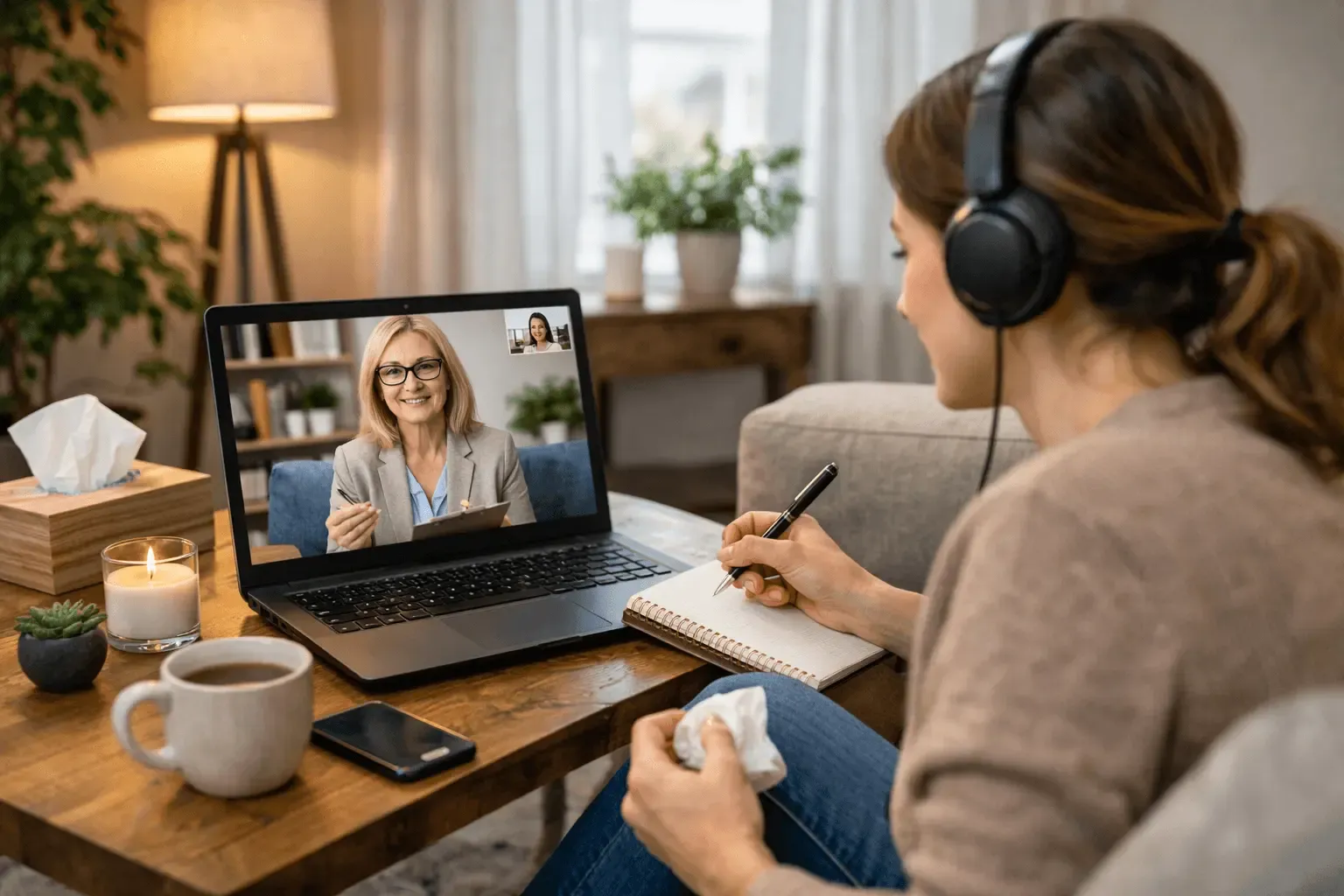
Is Online Therapy as Effective as In-Person? What 2025 Research Shows
By Almadelic
Posted November 13, 2025
Questions about online therapy effectiveness are among the most common concerns when considering virtual mental health treatment. The virtual therapy benefits debate has been settled by comprehensive 2025 research showing that online therapy is as effective as in-person sessions for treating depression, anxiety, PTSD, and OCD. If you're weighing telehealth therapy research against traditional treatment, the latest online counseling studies provide clear, evidence-based answers.
Groundbreaking 2025 Research on Online Therapy Effectiveness
The most comprehensive telehealth therapy research to date comes from a landmark study published in July 2025. Researchers from Sweden's public mental health system analyzed 2,300 patients over six years, producing definitive evidence about online therapy effectiveness across multiple mental health conditions.
The study tracked patients for three years before the pandemic and three years during it, when nearly half of all visits shifted online. Despite this rapid transition from just 4% of visits being online to nearly 50%, treatment outcomes didn't decline—they remained completely stable across all measured conditions.
The recovery rates demonstrate clear virtual therapy benefits. Among patients who received online therapy, 38% of those with depression recovered, along with 56% of patients with generalized anxiety disorder, 46% with OCD, and 59% with PTSD. These numbers matched the outcomes of in-person treatment, proving that online therapy effectiveness equals traditional face-to-face sessions.
Why Virtual Therapy Benefits Match In-Person Treatment
Understanding online therapy effectiveness requires looking at the core elements that make any therapy work. Recent online counseling studies have identified several key factors that explain why virtual therapy benefits are equivalent to traditional treatment.
Strong Therapeutic Relationships Develop Online
One of the most significant findings in telehealth therapy research is that the therapeutic relationship—the foundation of effective therapy—translates remarkably well to online settings. Studies examining online therapy effectiveness found that patients could establish strong, positive therapeutic relationships through video platforms, with 96% of online therapy patients rating their contact with their therapist as "personal."
This connection isn't just maintained online—it actually develops and strengthens throughout the treatment process. The quality of this online relationship directly correlates with treatment outcomes, demonstrating one of the primary virtual therapy benefits over initial skepticism about remote care.
Evidence-Based Treatments Deliver Virtual Therapy Benefits
The most effective therapy approaches work equally well whether delivered in person or online. Cognitive Behavioral Therapy, which focuses on identifying and changing unhelpful thought patterns and behaviors, has shown particularly strong online therapy effectiveness in recent studies.
A 2025 meta-analysis found that 86% of clients showed equal or better progress with online therapy versus in-person care, especially when using CBT approaches combined with video sessions. The effect sizes for online CBT ranged from 0.6 to 1.9 in therapist-guided sessions—numbers that confirm robust online therapy effectiveness matching or exceeding traditional outcomes.
Regular Monitoring Ensures Online Therapy Effectiveness
What makes online therapy particularly effective in 2025 is the integration of regular progress tracking. Patients complete standardized mental health assessments throughout treatment, allowing therapists to monitor symptom improvement in real-time. This data-driven approach ensures that online therapy effectiveness maintains the same high standards as in-person care, representing a significant evolution in virtual therapy benefits.
Online Therapy Effectiveness for Specific Mental Health Conditions
While telehealth therapy research confirms virtual therapy benefits across many diagnoses, certain conditions show particularly strong outcomes in online settings.
Depression Treatment Through Online Therapy
Online therapy effectiveness for depression has been demonstrated across multiple studies. Patients receiving online treatment for moderate depression showed significant improvement, with many experiencing even greater symptom reduction in the medium term compared to face-to-face therapy.
Three months after completing online treatment, 57% of patients no longer met criteria for depression, compared to 42% of those who received conventional in-person therapy. This sustained improvement represents one of the most compelling virtual therapy benefits documented in recent online counseling studies.
Anxiety Disorders Respond to Virtual Therapy Benefits
Anxiety conditions respond exceptionally well to online therapy, with telehealth therapy research showing robust effect sizes. For therapist-assisted online interventions, effectiveness ratings range between 0.7 and 1.7—matching the efficacy of face-to-face CBT.
For generalized anxiety disorder specifically, the 56% recovery rate in online therapy settings demonstrates that virtual treatment can effectively address even chronic anxiety conditions. The online therapy effectiveness for anxiety rivals or exceeds traditional treatment outcomes.
PTSD Treatment and Online Therapy Effectiveness
Post-traumatic stress disorder treatment through online therapy has shown particularly encouraging results in recent online counseling studies. Internet-based cognitive behavioral therapy for PTSD produced large effect sizes, with 74% of patients with initial PTSD changing diagnostic categories after online treatment.
The controlled, safe environment of home-based therapy can actually enhance feelings of security for trauma survivors, making it easier to engage with difficult therapeutic work. This represents a unique aspect of virtual therapy benefits that sometimes surpasses in-person treatment for trauma-related conditions.
OCD and Virtual Therapy Benefits
Obsessive-compulsive disorder responds well to online exposure and response prevention therapy. With a 46% recovery rate in virtual settings, online therapy effectiveness for OCD proves that even conditions requiring specific therapeutic techniques can be successfully addressed through telehealth platforms.
Recent telehealth therapy research indicates that the structured nature of online sessions can actually support the systematic approach required for effective OCD treatment, adding another dimension to documented virtual therapy benefits.
Key Advantages Demonstrating Virtual Therapy Benefits
Beyond matching the effectiveness of in-person therapy, online treatment offers distinct advantages that enhance the therapeutic process and demonstrate clear virtual therapy benefits.
Accessibility Enhances Online Therapy Effectiveness
For many people, getting to a therapist's office presents significant challenges. Transportation difficulties, living in rural areas, physical disabilities, or demanding work schedules can make regular in-person appointments nearly impossible. Online therapy effectiveness is particularly notable for patients who would otherwise face barriers to treatment, ensuring that effective mental health care is accessible regardless of location or circumstances.
Comfort and Privacy Support Online Therapy Effectiveness
Being in your own familiar environment during therapy sessions can reduce anxiety and improve emotional regulation. Many patients report feeling more comfortable opening up about difficult topics when they're in their own space rather than an unfamiliar office. This increased comfort represents one of the virtual therapy benefits that can accelerate therapeutic progress and deepen the work.
Flexibility Improves Online Therapy Effectiveness
Consistency is crucial for therapy effectiveness, and online counseling studies consistently show that virtual therapy benefits include better attendance rates. Online therapy's flexible scheduling makes it easier to maintain regular sessions even during busy periods, travel, or life transitions. This continuity of care contributes directly to better outcomes, as patients can stay engaged with treatment without lengthy gaps between sessions.
Reduced Wait Times Maximize Virtual Therapy Benefits
Traditional in-person therapy often involves waiting weeks or months for an initial appointment. Online therapy platforms can typically connect you with a licensed therapist much more quickly, meaning you can start treatment when you're motivated and ready for help. This immediate access represents a significant practical advantage in virtual therapy benefits.
Essential Factors for Optimal Online Therapy Effectiveness
While telehealth therapy research confirms virtual therapy benefits, certain factors contribute to optimal outcomes and maximum online therapy effectiveness.
Licensed Providers Ensure Online Therapy Effectiveness
The quality of your therapist matters more than the delivery method. Effective online therapy requires working with licensed mental health professionals who have training in evidence-based treatments and experience with telehealth delivery. At Almadelic, all therapists are licensed in Colorado, Ohio, and Florida, ensuring you receive care from qualified professionals who understand both effective therapy techniques and the nuances of virtual delivery that maximize online therapy effectiveness.
Secure Technology Supports Virtual Therapy Benefits
Professional online therapy platforms use HIPAA-compliant video systems that protect your privacy and ensure confidentiality. The technology should be user-friendly and reliable, allowing you to focus on your therapeutic work rather than technical difficulties. Reliable technology infrastructure is essential for realizing full virtual therapy benefits.
Active Engagement Maximizes Online Therapy Effectiveness
Online therapy requires the same commitment and engagement as in-person treatment. You'll need a private space for sessions, a stable internet connection, and the willingness to actively participate in therapy exercises and homework between sessions. The convenience of online therapy makes consistency easier, but online therapy effectiveness still depends on your active engagement in the therapeutic process.
Evaluating Online Therapy Effectiveness for Your Needs
Online counseling studies show that online therapy works exceptionally well for most people with anxiety, depression, PTSD, OCD, and many other mental health conditions. Virtual therapy benefits are particularly notable if you value flexibility, live in an area with limited mental health resources, or feel more comfortable in your own environment.
However, individuals with very severe symptoms, active substance abuse issues, or those in crisis may benefit from more intensive in-person care initially. The good news is that you can always start with online therapy and transition to in-person care if needed—or vice versa. The flexibility to choose based on your needs represents another of the virtual therapy benefits available through modern mental health care.
Moving Forward with Evidence-Based Virtual Mental Health Care
The telehealth therapy research is clear: online therapy effectiveness equals traditional in-person therapy across major mental health conditions. Online counseling studies from 2025 provide the strongest evidence to date that virtual therapy is not a compromise or second-best option—it's an evidence-based, effective form of mental health care that produces outcomes equal to traditional treatment.
With the documented virtual therapy benefits of accessibility, convenience, and flexibility, online therapy represents a genuine advancement in how we approach mental health treatment. The question is no longer about online therapy effectiveness—it's about whether the format fits your preferences and lifestyle.
If you're ready to experience the proven benefits of online therapy, Almadelic offers comprehensive virtual mental health services in Colorado, Ohio, and Florida. Our licensed therapists specialize in treating anxiety, depression, PTSD, OCD, and other conditions using evidence-based approaches tailored to your needs.
Schedule your initial consultation at https://www.almadelic.com to learn how online therapy can support your mental health journey, or explore our specialized treatment programs to find the approach that's right for you.
Frequently Asked Questions About Online Therapy Effectiveness
Q: Can online therapy really create the same strong therapist-patient relationship as in-person treatment?
A: Yes. Telehealth therapy research consistently demonstrates that online therapy effectiveness includes the ability to develop strong, meaningful therapeutic relationships. In fact, 96% of online therapy patients rate their contact with their therapist as "personal," and the quality of the online therapeutic alliance correlates directly with positive treatment outcomes. The therapeutic relationship develops and strengthens throughout online treatment just as it does in traditional settings, confirming one of the key virtual therapy benefits.
Q: Is online therapy effectiveness proven for severe mental health conditions?
A: Online therapy effectiveness has been proven for moderate to severe depression, generalized anxiety disorder, PTSD, and OCD. However, individuals experiencing a mental health crisis, having active suicidal ideation, or dealing with very severe symptoms may initially benefit from in-person care where immediate intervention is available. Your initial consultation will help determine the most appropriate level of care for maximizing online therapy effectiveness in your specific situation.
Q: How long does it take to see virtual therapy benefits?
A: The timeline varies by individual and condition, but online counseling studies show that many patients begin experiencing symptom improvement within the first few weeks of online therapy. For depression and anxiety, significant virtual therapy benefits often become apparent within 8-12 weeks of consistent treatment. Regular progress monitoring throughout online therapy helps ensure you're achieving optimal online therapy effectiveness at an appropriate pace.
Q: Does insurance recognize online therapy effectiveness and cover virtual sessions?
A: Many insurance plans now cover online therapy at the same rate as in-person sessions, reflecting widespread recognition of online therapy effectiveness. Coverage varies by provider and state, but most major insurance companies recognize online therapy as a legitimate form of mental health care backed by solid telehealth therapy research. Almadelic accepts various insurance plans in Colorado, Ohio, and Florida. Contact our team to verify your specific coverage and learn about out-of-pocket options if needed.
Q: What if online therapy effectiveness doesn't work as well for me personally?
A: While online counseling studies show broad online therapy effectiveness, individual preferences matter. You're never locked into online therapy. If you find that in-person sessions work better for you, you can transition to face-to-face care. Similarly, many people start with in-person therapy and later switch to online sessions to take advantage of virtual therapy benefits like convenience and flexibility. The most important factor in therapy effectiveness—whether online or in-person—is finding an approach that you'll stick with consistently.
Sources:
- Karolinska Institutet (July 2025). "Online therapy as effective as in-person therapy, finds large study." Analysis of 2,300 patients over six years in Sweden's public mental health system. https://theconversation.com/online-therapy-as-effective-as-in-person-therapy-finds-large-study-259959
- JMIR Mental Health (2025). Meta-analysis finding 86% of clients showed equal or better progress with online therapy versus in-person care. Adaptive Behavioral Services research compilation.
- University of Zurich. "Psychotherapy via internet as good as if not better than face-to-face consultations." Long-term follow-up study showing sustained benefits of online therapy for depression. https://www.sciencedaily.com/releases/2013/07/130730091255.htm