
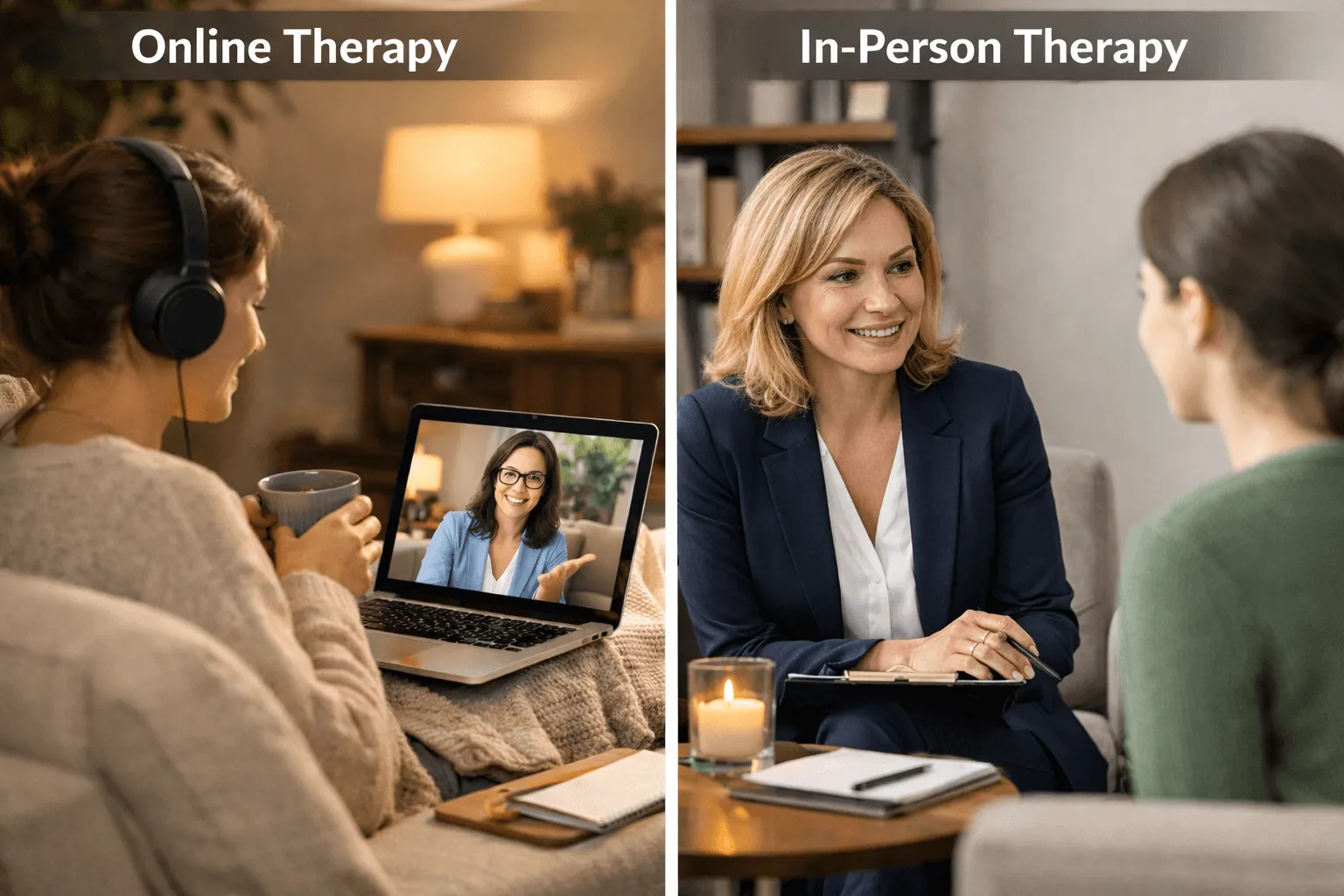
Online Therapy vs In-Person Therapy: Which is Right for You?
By Almadelic
Posted August 28, 2025
The landscape of mental health care has dramatically evolved over the past few years, with online therapy emerging as a viable and effective alternative to traditional in-person sessions. As more people seek accessible, convenient mental health support, the question arises: which approach is better for your unique needs?
Whether you're considering therapy for the first time or exploring different treatment options, understanding the key differences between online and in-person therapy can help you make the best decision for your mental health journey.
The Effectiveness Question: What Does Research Say?
One of the most common concerns about online therapy is whether it's as effective as face-to-face treatment. The good news is that extensive research supports the efficacy of virtual mental health care across various conditions.
A comprehensive review of 70 studies published from 2003 to 2013 found that virtual treatment was as effective as in-person care for multiple patient populations with barriers to mental health treatment. This research provides strong evidence that online therapy can deliver comparable outcomes to traditional therapy settings.
Furthermore, recent studies during the COVID-19 pandemic have reinforced these findings. Research published in BMC Psychology demonstrated that online psychodynamic counseling was able to reduce psychological distress with medium to high effect sizes, showing effectiveness similar to face-to-face interventions for conditions including depression, anxiety, and interpersonal sensitivity.
Advantages of Online Therapy
Accessibility and Convenience
Online therapy breaks down geographical barriers, making mental health care accessible to individuals in rural or underserved areas where in-person options may be limited. This is particularly valuable for people with mobility challenges, transportation issues, or busy schedules that make regular office visits difficult.
Comfort and Reduced Stigma
Many clients find it easier to open up in the familiar environment of their own home. The perceived privacy and comfort of online sessions can reduce the stigma often associated with seeking mental health care, encouraging more people to start and continue their therapeutic journey.
Cost-Effectiveness
Online therapy is typically more affordable than traditional in-person sessions. Therapists providing virtual services often have lower overhead costs, which can translate to more reasonable rates for clients, especially those without insurance coverage.
Flexible Scheduling
Virtual sessions often offer more flexible scheduling options, including evening and weekend appointments that might not be available in traditional office settings.
Advantages of In-Person Therapy
Enhanced Nonverbal Communication
Face-to-face interactions allow therapists to observe subtle body language, facial expressions, and other nonverbal cues that can provide valuable insights into a client's emotional state and needs. This fuller communication can enhance the therapeutic relationship and understanding.
Therapeutic Tools and Techniques
In-person therapy allows for the use of various therapeutic tools and techniques that may not translate well to virtual settings, such as art therapy, music therapy, or certain somatic interventions.
Dedicated Therapeutic Space
The physical separation from daily distractions in a therapist's office can help create a more focused, therapeutic environment that some clients find beneficial for processing difficult emotions or traumatic experiences.
Crisis Intervention Capabilities
In-person settings provide better options for immediate crisis intervention when needed, offering a sense of safety and security that some clients require.
Considerations for Specific Populations
Individuals
For individual therapy, both online and in-person formats have shown excellent results. The choice often comes down to personal preference, lifestyle factors, and specific mental health needs. Online therapy works particularly well for anxiety, depression, and general life stressors.
Couples
Couples therapy can be effectively conducted online, though some relationship dynamics may be easier to observe and address in person. The convenience of online sessions can actually increase attendance rates for busy couples.
Veterans
Veterans often find online therapy particularly appealing due to privacy concerns and the ability to access care without visiting a medical facility. The flexibility and reduced stigma can be especially beneficial for this population.
LGBTQIA+ Community
Online therapy can provide access to specialized, affirming therapists who may not be available locally. The increased privacy and comfort level can be particularly important for individuals exploring identity or dealing with discrimination.
Making Your Choice: Key Factors to Consider
Technology Comfort and Access
Consider your comfort level with technology and your access to reliable internet and private space for sessions. These practical factors can significantly impact your therapy experience.
Severity and Type of Condition
While online therapy is effective for many conditions, certain severe mental health issues or crisis situations may require in-person care. Discuss your specific needs with a mental health professional.
Personal Learning Style
Some people process information and emotions better through in-person interaction, while others feel more comfortable expressing themselves through digital communication.
Therapeutic Goals
Consider what you hope to achieve in therapy. Some goals may be better suited to one format over another.
The Future of Mental Health Care
At Almadelic, we recognize that the future of mental health care isn't about choosing between online and in-person therapy—it's about offering flexible, accessible options that meet diverse needs. Our innovative approach combines the convenience of virtual therapy with cutting-edge treatments, ensuring you have access to the most effective care regardless of format.
As we expand our services to include comprehensive online therapy options, we remain committed to providing evidence-based treatment that delivers real results. Whether you choose virtual sessions or in-person care, the most important factor is finding the approach that works best for your unique situation and mental health goals.
Conclusion
Both online and in-person therapy offer unique advantages and can be highly effective for treating various mental health conditions. The best choice depends on your individual needs, preferences, and circumstances. Consider factors such as accessibility, comfort level, specific therapeutic goals, and the nature of your mental health concerns when making your decision.
Remember, the most effective therapy is the one you'll consistently engage with. Whether that's from the comfort of your living room or in a traditional office setting, taking that first step toward better mental health is what truly matters.
If you're ready to explore your therapy options, consider speaking with a licensed mental health professional who can help guide you toward the format and treatment approach that's right for you.