
Social Anxiety and Online Therapy: Why Virtual Sessions Can Feel Safer
By Almadelic
Posted April 21, 2026
Social anxiety creates a frustrating paradox. The very thing that could help, therapy, requires doing exactly what feels most threatening: sitting across from a stranger, making eye contact, and talking about the thoughts you spend most of your energy hiding.
Online therapy helps break this cycle by letting people with social anxiety begin treatment in a space where they feel safe and in control. Research shows that the virtual format reduces the perceived threat of negative evaluation and removes environmental triggers like waiting rooms and unfamiliar clinics that often prevent people with social anxiety from seeking help in the first place.
Why Social Anxiety Makes It Harder to Seek Therapy
Most mental health conditions create barriers to treatment. Depression saps the motivation to make a phone call. ADHD makes it hard to follow through on scheduling. But social anxiety is unique because the treatment setting itself can be a trigger.
Walking into a clinic means navigating a waiting room full of strangers. Checking in at a front desk means making small talk. Sitting face-to-face with a therapist in an unfamiliar office means doing exactly what the disorder tells you to avoid. Research published in F1000Research notes that for people with social anxiety, "the stigma associated with psychological treatment and their tendency to avoid social situations make counseling situations a perceived threat." Many individuals with social anxiety avoid seeking treatment specifically because of their fear of what others, including therapists, might think of them.
This is the catch-22: the people who need help the most are the ones the traditional therapy model is hardest for.
How Online Therapy Lowers the Barrier to Getting Started
No Waiting Room, No New Environment
For someone with social anxiety, the minutes before a therapy session can be more distressing than the session itself. The walk through the building, the eye contact with a receptionist, the wait in a room with other patients. These moments activate the exact fears that brought the person to therapy in the first place.
Online therapy eliminates all of them. Researchers at the University of Oxford have noted that remote therapy offers people with social anxiety the "added appeal of not having to start therapy with an in-person meeting in a strange environment." Instead, the first session happens in your living room, your bedroom, or wherever you feel most at ease.
More Control Over Your Space
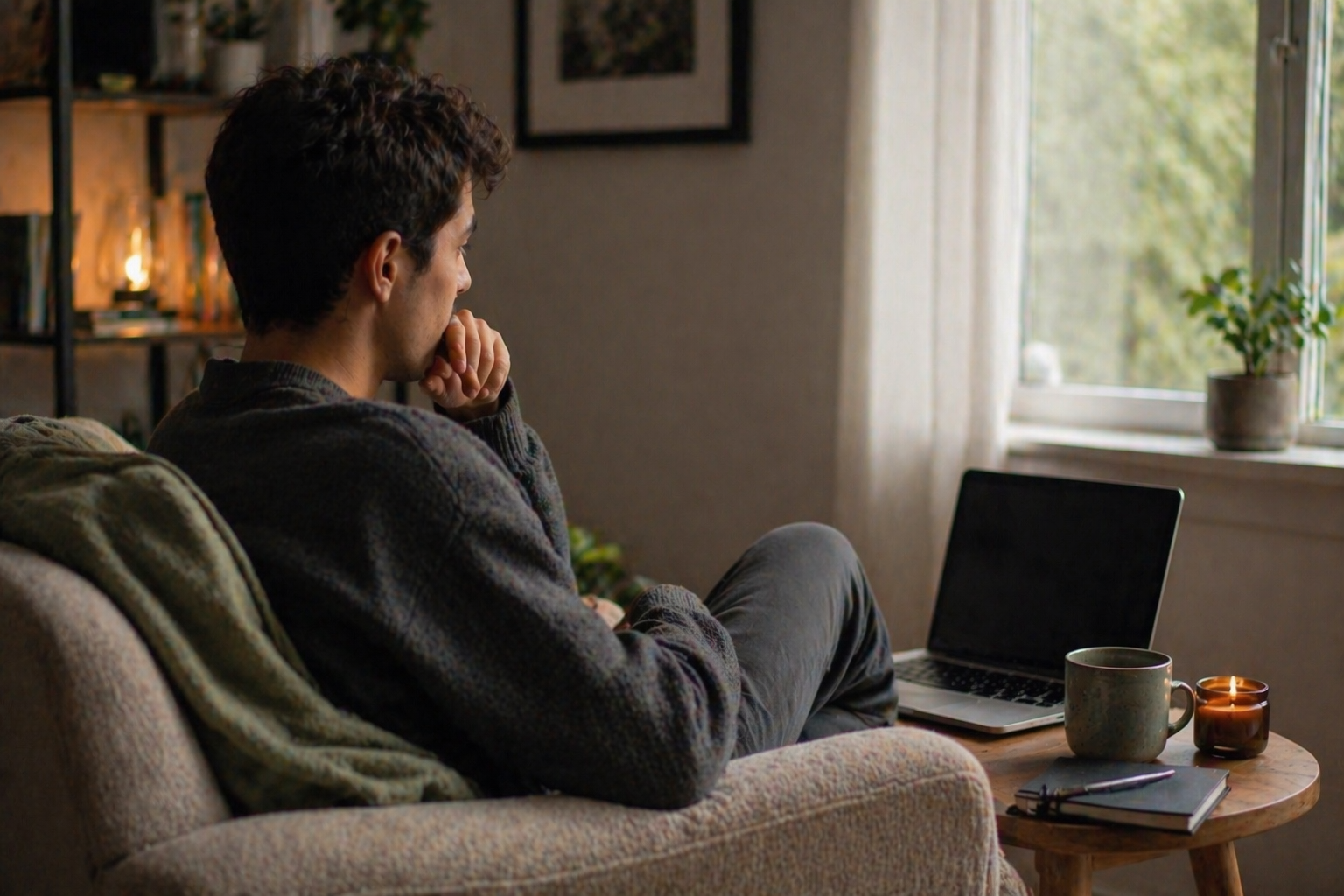
A core feature of social anxiety is the feeling of being exposed and out of control in social situations. Online therapy shifts that dynamic. You choose where you sit. You control the lighting, the background, and how much of yourself is visible on screen. You can keep notes nearby without feeling self-conscious about looking at them. This sense of control directly counters the vulnerability that makes in-person therapy feel overwhelming for people with social anxiety.
Reduced Fear of Being Seen Seeking Help
Stigma around mental health treatment is a barrier for many people, but it hits differently when you have social anxiety. The thought of being spotted walking into a therapist's office, or having a coworker notice you leaving for an appointment, can be enough to prevent someone from booking at all. The Oxford researchers specifically identified "the stigma of being seen in a mental health unit" as a barrier that remote therapy helps overcome. With online sessions, no one needs to know you are in therapy unless you choose to tell them.
Online Therapy Is Just as Effective for Social Anxiety
If the convenience of online therapy came at the cost of effectiveness, it would not be worth recommending. But research consistently shows that internet-delivered CBT for social anxiety disorder produces outcomes comparable to face-to-face treatment. In fact, digital therapy for social anxiety is one of the most extensively researched areas of online mental health treatment, with a strong evidence base supporting its use. For a deeper look at the research on online therapy outcomes, see our post on whether online therapy is as effective as in-person care.
What to Expect in an Online Session for Social Anxiety
If you have never done online therapy before, it is natural to wonder what the experience will feel like, especially when anxiety is part of the picture.
The first session is typically a conversation, not a test. Your therapist will ask questions about your experiences and what brought you to therapy. You will not be put on the spot or pressured to share more than you are ready for. Most therapists who work with social anxiety understand that the act of showing up is already a big step.
You will log into a secure video platform at your scheduled time. The session usually lasts about 50 minutes. If the idea of being on video feels like too much, it is okay to say that. Many therapists are willing to start with audio only and work up to video as you get more comfortable.
Tips for Making Online Therapy Work if You Have Social Anxiety
- Start with the camera off if you need to. There is no rule that says you have to be on video from day one. Let your therapist know your comfort level and build from there.
- Write down what you want to say beforehand. Social anxiety often makes it hard to find words in the moment. Having a few notes in front of you can ease that pressure, and your therapist will not judge you for reading from them.
- Schedule sessions when your anxiety is typically lowest. If mornings are calmer for you than afternoons, book your sessions then. Online therapy gives you that flexibility.
- Give it more than one session. The first session will likely feel awkward. That is normal for everyone, not just people with social anxiety. Real comfort with your therapist builds over a few sessions, and staying consistent is one of the strongest predictors of progress.
Taking the First Step
Starting therapy when you have social anxiety takes real courage. Almadelic's online therapy platform is designed to make that first step easier, with licensed therapists who specialize in anxiety treatment and a free consultation to help you find the right match without any pressure.
Many members qualify for $0 copays through their insurance, so cost does not have to be another barrier.
Schedule a free consultation and start in a space that feels safe.
Frequently Asked Questions
Can online therapy really help with social anxiety?
Yes, internet-delivered CBT for social anxiety is one of the most well-researched forms of online therapy, with outcomes comparable to in-person treatment.
What if I'm too anxious to turn on my camera?
That is completely okay. Many therapists who work with social anxiety are comfortable starting with audio-only sessions. Turning on the camera can become a goal you work toward together, at your own pace.
How long does it take to see improvement with social anxiety therapy?
Many people notice some improvement within the first few weeks of consistent sessions. Lasting change typically develops over several months as you practice new skills between appointments. The key factor is staying consistent with your sessions.