
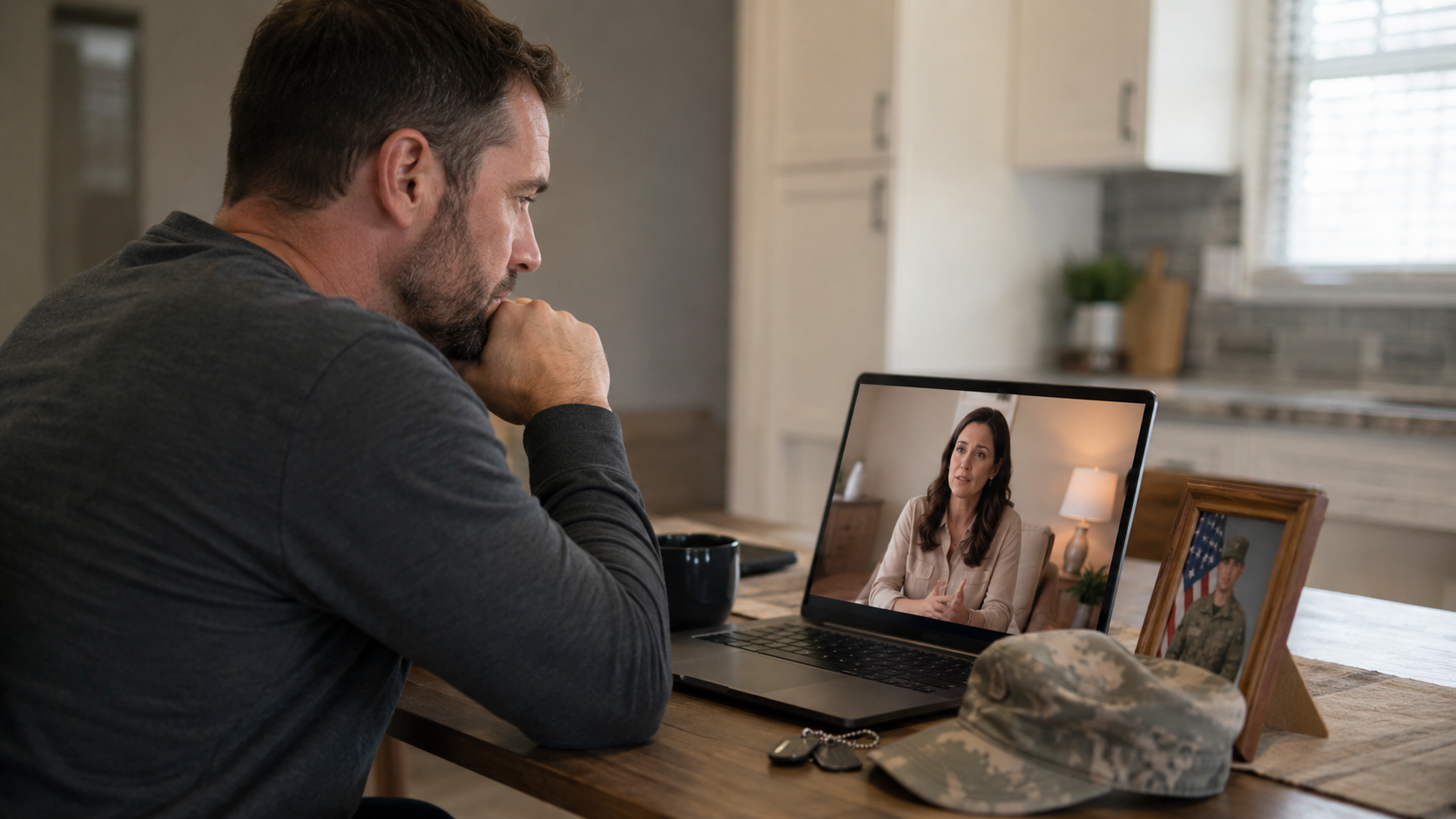
Why Many Veterans Don't Seek Therapy and How Online Access Is Changing That
By Almadelic
Posted May 7, 2026
Nearly 60% of military personnel who experience mental health challenges never seek treatment. Not because help is unavailable. Because something stands between them and the decision to ask for it.
The barriers that prevent veterans from seeking therapy are rooted in military culture itself: stigma around mental health, a deeply trained mindset of self-reliance, fears about confidentiality, and structural obstacles like geographic isolation and administrative complexity. Online therapy is beginning to close this gap by removing many of the environmental and logistical triggers that make traditional treatment feel inaccessible.
The Size of the Gap
The numbers are difficult to ignore. A 2025 review published in the Annals of Medicine and Surgery found that roughly 60% of military personnel with mental health problems avoid seeking help, even when professional treatment could make a meaningful difference. Conditions like PTSD, depression, anxiety, and substance use disorders are common among veterans, particularly those who served in combat zones. Yet the majority of those affected go without care.
This is not a problem of awareness. Most veterans know that services exist. The problem is what happens between recognizing the need and actually picking up the phone.
Cultural Barriers Within the Military
Stigma and Fear of Judgment
Across military studies, stigma is consistently the most cited reason veterans do not seek therapy. The fear is specific: that others will see them differently, treat them as less capable, or view them as mentally unfit.
What makes this harder is that veterans often overestimate how harshly others would judge them. Research on young adult veterans found that while many were concerned about negative perceptions if they sought treatment, far fewer said they would actually judge a fellow veteran in the same situation. The stigma is driven more by perception than reality, but that perception is powerful enough to keep people from getting help.
Self-Reliance as Identity
Military training is designed to build self-sufficiency. Service members learn to push through discomfort, solve problems independently, and avoid showing vulnerability. Those traits are essential in combat. They become a liability when it comes to mental health.
A 2025 review of veteran mental health barriers identified masculine identity norms and a culture of self-reliance as significant factors that deter help-seeking. For many veterans, the idea of sitting in a therapist's office feels like an admission of failure. The same resilience that kept them alive during service becomes the thing that keeps them from healing after it.
Concerns About Confidentiality
Many veterans worry that seeking mental health treatment will follow them. That it will appear on records, affect security clearances, limit career opportunities, or become known to peers and supervisors. Even after separating from the military, these concerns persist. The same review found that perceived lack of confidentiality is a recurring barrier, one that discourages veterans from engaging with mental health services even when they recognize they need support.
Structural Barriers Beyond Stigma
Geographic Isolation
Not every veteran lives near a VA facility or a provider who specializes in military-related mental health. Rural veterans face the steepest access challenges, sometimes needing to travel hours for a single appointment. When the trip itself feels like a burden on top of the emotional weight of seeking help, it is easy to cancel or never book at all.
Administrative Complexity
Navigating VA benefits, eligibility requirements, and referral systems is its own obstacle. For a veteran already hesitant about seeking care, the added friction of paperwork, wait times, and bureaucratic processes can be enough to stop the process entirely. The structural complexity of the system works against the very people it is designed to serve.
How Online Access Is Closing the Gap
Online therapy does not eliminate stigma. It does not change military culture overnight. But it does remove several of the specific barriers that keep veterans from getting into a therapist's office.
Privacy. Sessions happen at home. No one sees you walk into a clinic or sit in a waiting room. For veterans concerned about being seen seeking help, this changes the calculus entirely.
Access. Geography stops being a barrier. A veteran in a rural part of Colorado or Ohio can connect with a specialized provider without a three-hour drive. All that is needed is a private space and an internet connection.
Simplicity. Online platforms operate outside the VA system. There is no complex referral process. No multi-week wait for an intake appointment. The path from deciding to try therapy to actually being in a session is shorter and more direct.
Control. The virtual format lets veterans start from a space where they feel comfortable. That sense of control, choosing the environment, adjusting the setup, even starting with audio only, lowers the emotional threshold for a first session.
None of this replaces the deeper work of shifting cultural attitudes around mental health in the military. But it does give veterans a way to start that does not require them to fight through every barrier at once.
Starting the Conversation
If anything in this post resonated, that recognition matters. Almadelic's online therapy for veterans connects you with licensed therapists who understand military culture, and every new patient starts with a consultation to find the right fit.
You served. You deserve support that meets you where you are.
Frequently Asked Questions
Why is it so hard for veterans to seek mental health care?
Military culture emphasizes self-reliance and toughness, which can make seeking therapy feel like a sign of weakness. Combined with fears about stigma, concerns about confidentiality, geographic isolation from providers, and the complexity of navigating VA systems, many veterans face multiple overlapping barriers that discourage them from getting help.
Does online therapy work for veterans with PTSD?
Yes. Online therapy has been shown to be effective for treating PTSD using evidence-based approaches like CBT and prolonged exposure therapy. The virtual format also offers the added benefit of allowing veterans to engage in treatment from a familiar, comfortable environment.